Our History
A Lifetime of Creativity, Craftsmanship and Invention
The story of Graham Sweet Studios begins long before the business was established in 1969.
From the department store windows of Cardiff to the other side of the world, our founder Graham Sweet’s life was shaped by creativity, adventure, curiosity and a willingness to try something different.
Those qualities would become the foundations of Graham Sweet Studios, a family business that has spent more than five decades inventing manufacturing techniques, developing unusual products and bringing creative ideas to life.
Today, the studio continues into its second generation, combining traditional craftsmanship with modern technology, new materials and an experienced team.
This is the story of Graham, the business he built, and the people who helped make it what it is today.

The Early Years — An Adventurous Beginning
Graham Sweet began his working life as a window dresser at James Howells department store in Cardiff, working under the guidance of its long-serving Display Manager, John Fear.
It was here that he developed the artistic skills, practical ingenuity and understanding of visual presentation that would influence much of his later career.
But Graham’s ambitions soon took him much further afield.
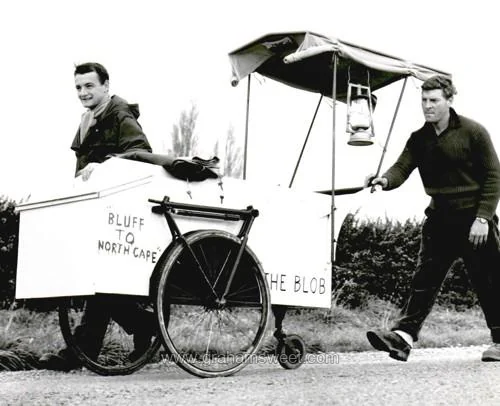
In his early twenties, he set off on a working holiday to New Zealand with his friend Les Brookes. During their adventures, the pair pushed a handcart affectionately known as the Blob the length of the country, stopping along the way to find work and earn enough money to continue their travels.
Graham continued working as a window dresser in New Zealand department stores, and it was during his time there that he met his future wife, Noeline.
Originally from New Zealand, Noeline had an adventurous background of her own. She trained as a nurse and travelled extensively throughout Europe during her younger years.
While in Britain, she worked at Stoke Mandeville Hospital during the pioneering work of Dr Ludwig Guttmann, whose rehabilitation programmes and sporting competitions laid the foundations for the Paralympic Games.
Graham’s travels also took him to Australia, where he worked at the prestigious David Jones department store in Sydney.
Never one to shy away from a new experience, he also spent time working as a ship’s photographer aboard the RMS Windsor Castle, sailing between Britain and South Africa.
By the time he returned to Cardiff in 1968, Graham had gathered a remarkable range of experiences, practical skills and ideas that would help shape the next chapter of his life.
1969 — From the Kitchen Table to Graham Sweet Studios
After returning to Cardiff, Graham began putting his creative and inventive ideas into practice.
Some of his earliest commissions were produced at the family kitchen table — much to the horror of Noeline, as the work gradually began taking over their home!
In 1969, Graham established the business that would become Graham Sweet Studios.
One of his most important early inventions was the Dragon’s Tooth machine, an innovative method of cutting and shaping expanded polystyrene into intricate, repeatable three-dimensional patterns.
The invention won a competition, bringing in valuable prize money at a crucial stage in the young business’s development.
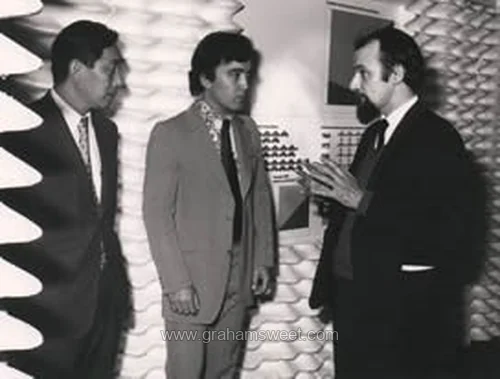
Graham subsequently sold Japanese rights relating to his cutting technology to Matsui, a Japanese company.
Together, the competition winnings and the agreement with Matsui provided much of the seed money that allowed the business to establish itself properly.
In October 1970, Graham opened his first studio, moving production out of the family home and laying the foundations for the business that would continue to grow over the following decades.
It was an early demonstration of something that would become a defining characteristic of Graham Sweet Studios: when an existing manufacturing method wasn’t suitable, Graham would look for a better way.
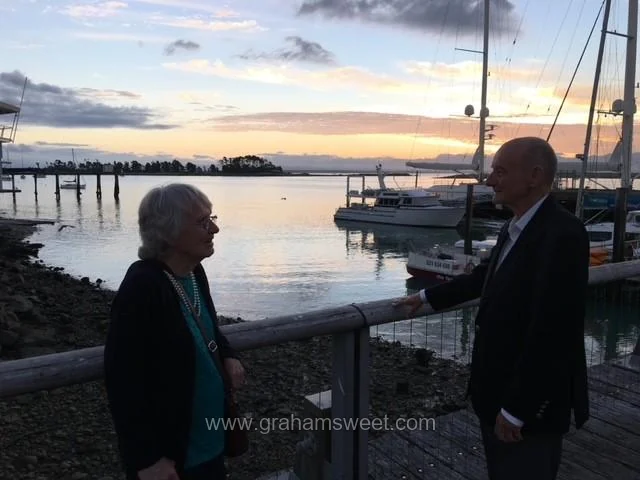
Graham and Noeline — Building a Family Business
While Graham was the creative and inventive force behind the studio, Noeline played an equally vital role in building the business.
From those earliest days when Graham’s projects began taking over the family kitchen table, they worked together to turn his ideas into a successful enterprise.
Noeline’s contribution went far beyond the office. She was involved in the practical work of the studio, cutting letters, painting products and helping prepare orders. She travelled with Graham to trade shows, supported the day-to-day running of the business and helped it grow, all while they were raising their family.
Graham was often the public face of Graham Sweet Studios, with his enthusiasm, creativity and larger-than-life ideas. But behind the projects and inventions was a genuine partnership, with Noeline contributing her own hard work, dedication and practical skills.
As the company developed, she continued working both in the workshop and behind the scenes, including many years in the office. Although her day-to-day involvement gradually reduced from around 2007, she remained part of the business until her passing in 2021.
Graham Sweet Studios will always bear Graham’s name, but the business they built was very much a shared achievement. Without Noeline’s contribution, it might never have become what it is today.
The 1970s and 1980s — Invention and Innovation
Throughout the 1970s, Graham continued to develop new products, many inspired by his early experience in department store window dressing.
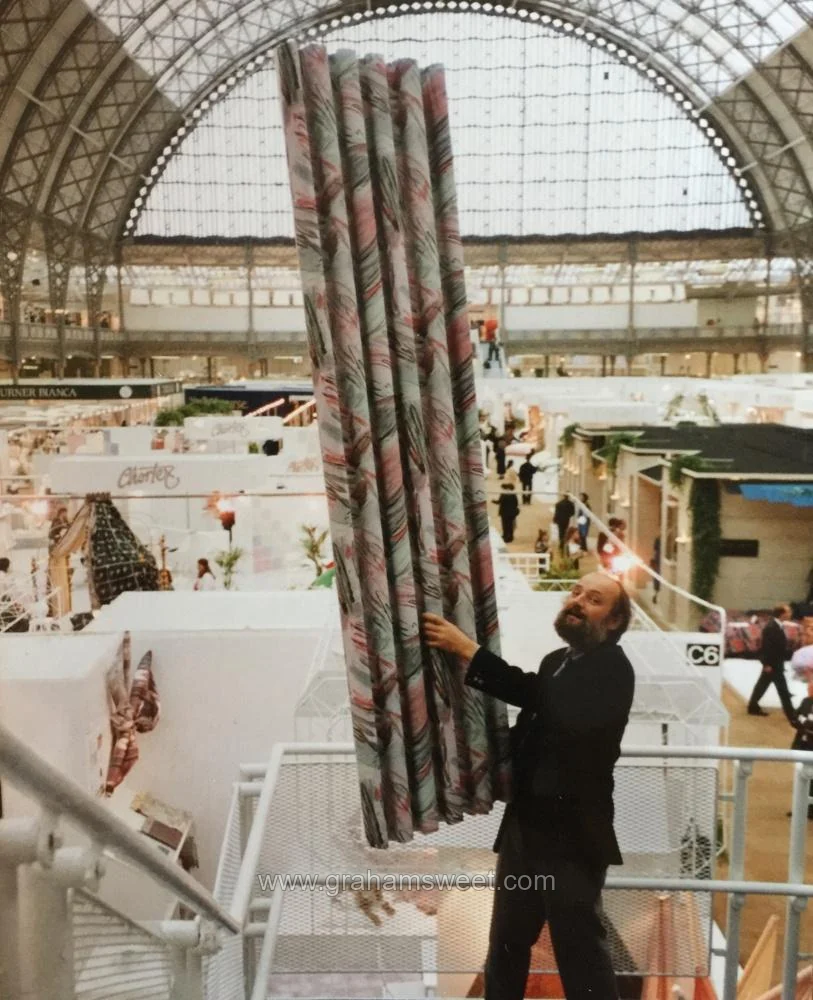
Among these were the studio’s Polystyrene Fabric Drapers and Towel Folders, innovative display products designed to help retailers present fabrics, towels and other merchandise.
These became popular with department stores across the UK, helping establish Graham Sweet Studios as a specialist supplier to the retail display industry.
As the business developed, Graham continued experimenting with different materials, production methods and applications.
In the late 1980s, working alongside his son David, he developed Rustlite, a range of lightweight decorative products that recreated the appearance of rusty iron chains and hoists, without the associated weight.
These developments reflected Graham’s ability to see possibilities in materials and manufacturing techniques that others might overlook.
For him, the challenge was rarely simply making something. It was finding a practical, inventive and sometimes entirely new way of achieving the result.
The 1990s — Ambitious Projects and New Technology
By the 1990s, Graham Sweet Studios had developed a reputation for producing unusual and technically challenging display pieces.
The studio’s work included commissions for major retailers, including sandstone-effect polystyrene rocks produced for Harrods window displays.
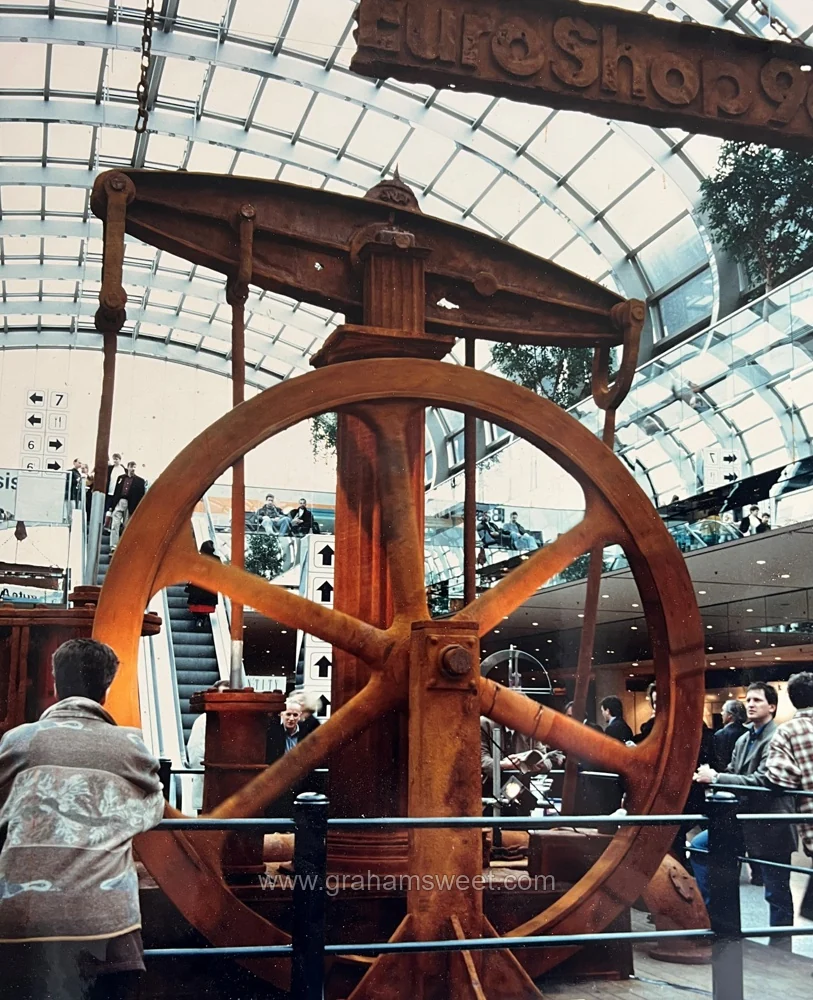
One particularly memorable commission came in 1996, when the studio was asked to create a five-metre-high working beam engine for the EuroShop exhibition at Messe Düsseldorf in Germany.
Installed in the main entrance hall, the enormous model incorporated moving mechanical components, artificial steam and synchronised sound effects.
It was a remarkable example of the studio’s ability to combine artistic presentation, engineering and practical manufacturing on a substantial scale.
Always Looking Ahead
Graham’s enthusiasm for innovation extended well beyond the workshop.
By 1998, Graham Sweet Studios had registered its own internet domain, embracing the possibilities of the emerging digital world at a time when many traditional manufacturing businesses had yet to establish an online presence.
The company website would continue to develop over the following decades, gradually evolving alongside the business itself.
Graham’s willingness to embrace new technology was not confined to his younger years. He remained interested in emerging processes, new equipment and unfamiliar ideas throughout his life.
He understood the importance of continually improving and was always willing to invest in the future of the company.
The Next Generation
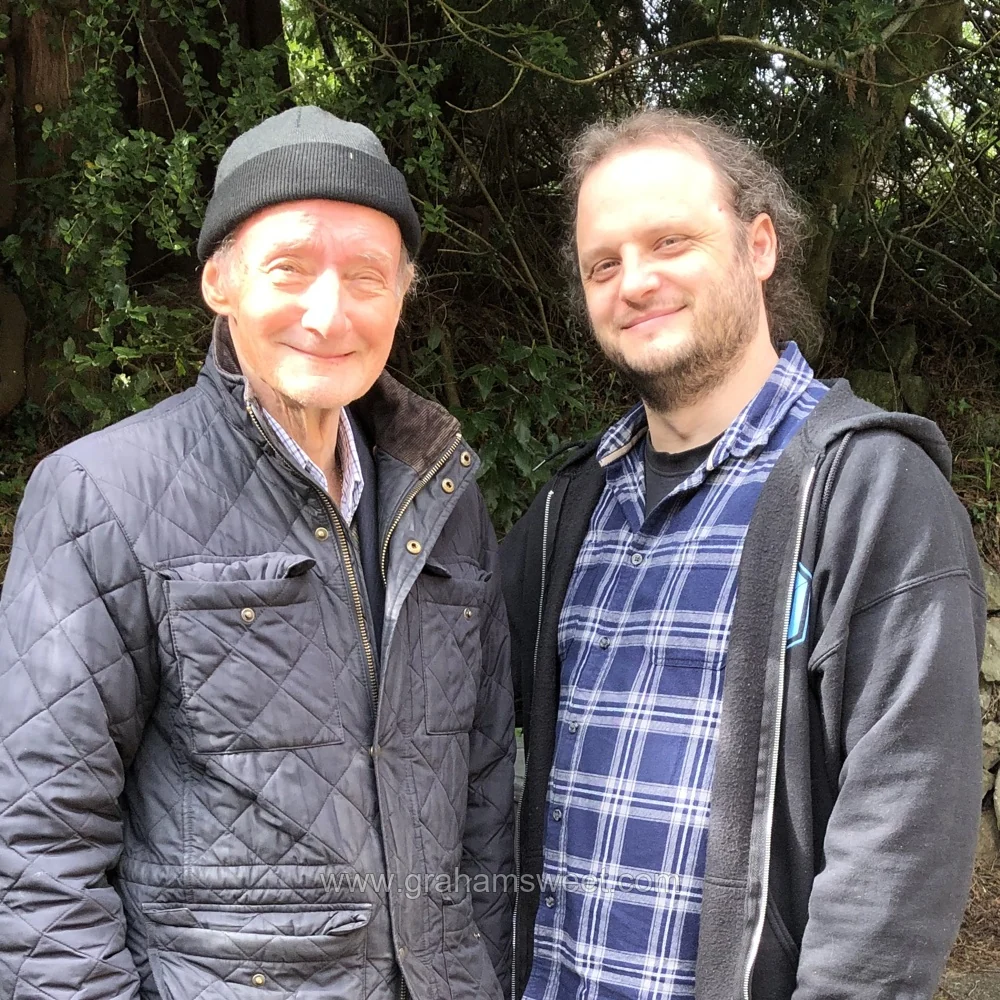
For Graham’s son Siôn, the workshop was part of everyday life from an early age.
He first began helping his father at around four years old, with an archive photograph from 1986 showing him working alongside Graham on an exhibition stand, aged just six.
Throughout his teenage years, Siôn was actively involved in the family business, gaining hands-on experience across many aspects of the studio’s work.
He went on to study Product Design with Engineering and Electronics at university, while continuing to work alongside his father.
In 2002, Siôn moved into the business full-time, bringing his technical background and practical experience to a company that had already been part of his life for many years.
Over the following years, Siôn took on increasing responsibility for the running and development of Graham Sweet Studios, helping guide the business through a period of significant growth and expansion.
Working alongside Graham, he helped introduce new technologies, manufacturing methods and ways of working, while developing the studio’s ability to undertake larger and more complex projects.
As the company continued to evolve, Siôn gradually assumed responsibility for its day-to-day leadership.
Importantly, this development was not a departure from Graham’s approach. Both generations shared an enthusiasm for creative problem-solving, experimentation and finding better ways to manufacture unusual objects.
Throughout this transition, Siôn remained committed to preserving his father’s values of craftsmanship, creativity and doing the best possible job for every customer.
What began as a childhood spent learning alongside his father had developed into a lifetime of experience, combining Graham’s traditional craftsmanship and inventive spirit with modern design, engineering and manufacturing expertise.
The 2000s — New Processes and Growing Demand
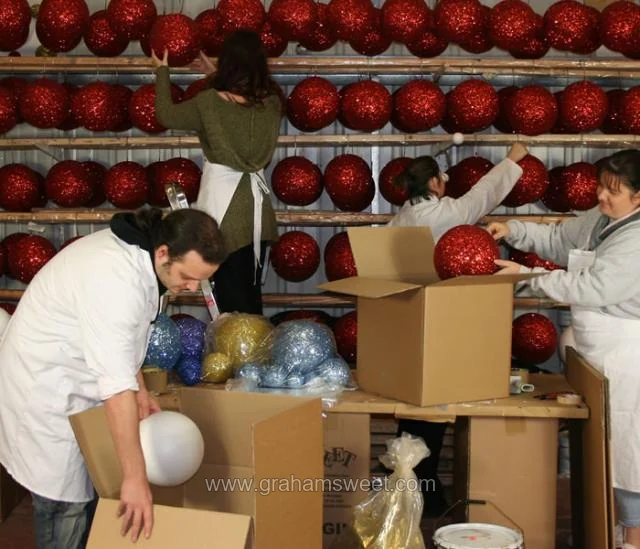
The early 2000s brought further advances in the studio’s manufacturing capabilities, particularly in the cutting and production of large polystyrene balls.
New cutting techniques and equipment allowed the studio to produce increasingly large spherical forms, building on the specialist polystyrene expertise established by Graham decades earlier.
These developments helped establish Graham Sweet Studios as one of the UK’s leading specialists in large polystyrene balls and shaped display products.
From 2006 onwards, the company entered a period of substantial growth.
Christmas display manufacturing expanded considerably from 2007, while demand for bespoke props, decorative features and larger production runs continued to increase.
In 2008, the studio doubled both its workshop space and workforce, providing additional capacity for increasingly ambitious projects.
The business also began undertaking larger manufacturing programmes for national retailers, producing matching display pieces for distribution across multiple stores.
A further expansion in 2015 saw the workshop space and workforce double again.
These were significant developments for the family business, driven by a combination of Graham’s established expertise, Siôn’s growing leadership and the skills of an expanding team.
From its modest beginnings, Graham Sweet Studios had developed into an established creative manufacturing business capable of producing everything from individual bespoke commissions to substantial nationwide retail display campaigns.
Passing on the Craft
As Graham Sweet Studios grew, the business began to evolve in ways that went beyond new machinery and larger premises.
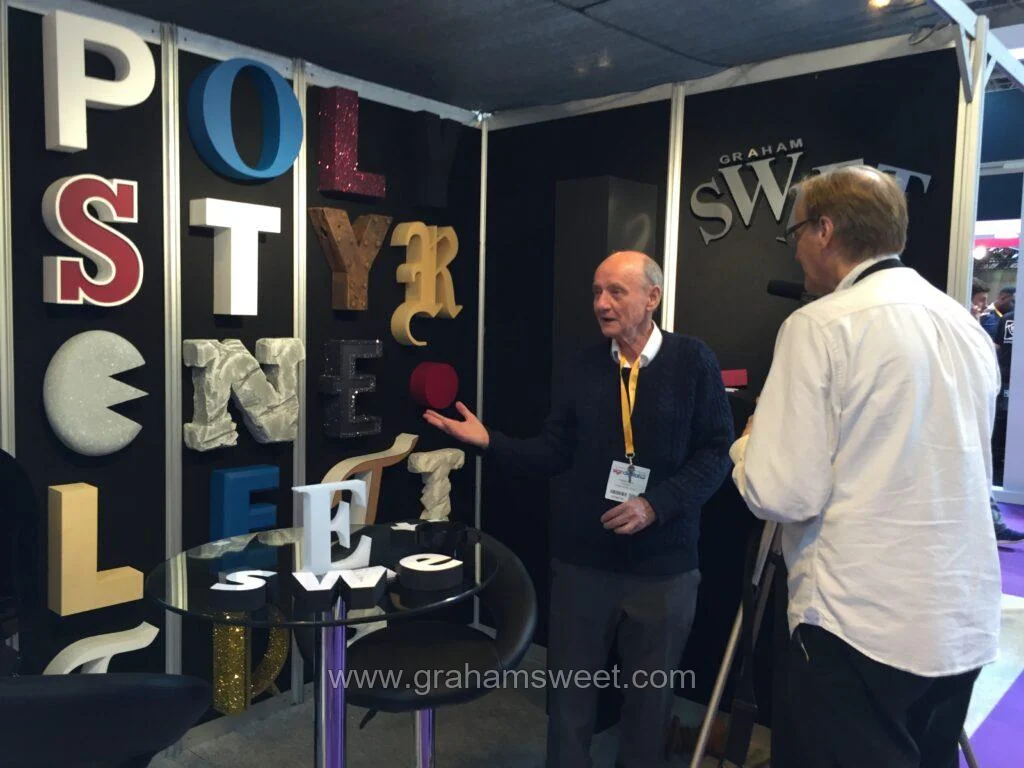
With Siôn gradually taking on more responsibility for the day-to-day running of the company, Graham was able to devote more time to something he particularly enjoyed: sharing his knowledge and experience with the people around him.
His decades of practical experience, inventive approach and understanding of materials made him an invaluable source of guidance.
Rather than simply passing on manufacturing techniques, he encouraged others to think creatively, experiment with ideas and develop their own solutions to unusual challenges.
This period also saw the arrival of people who would become central to the studio’s development.
A Growing Creative Team
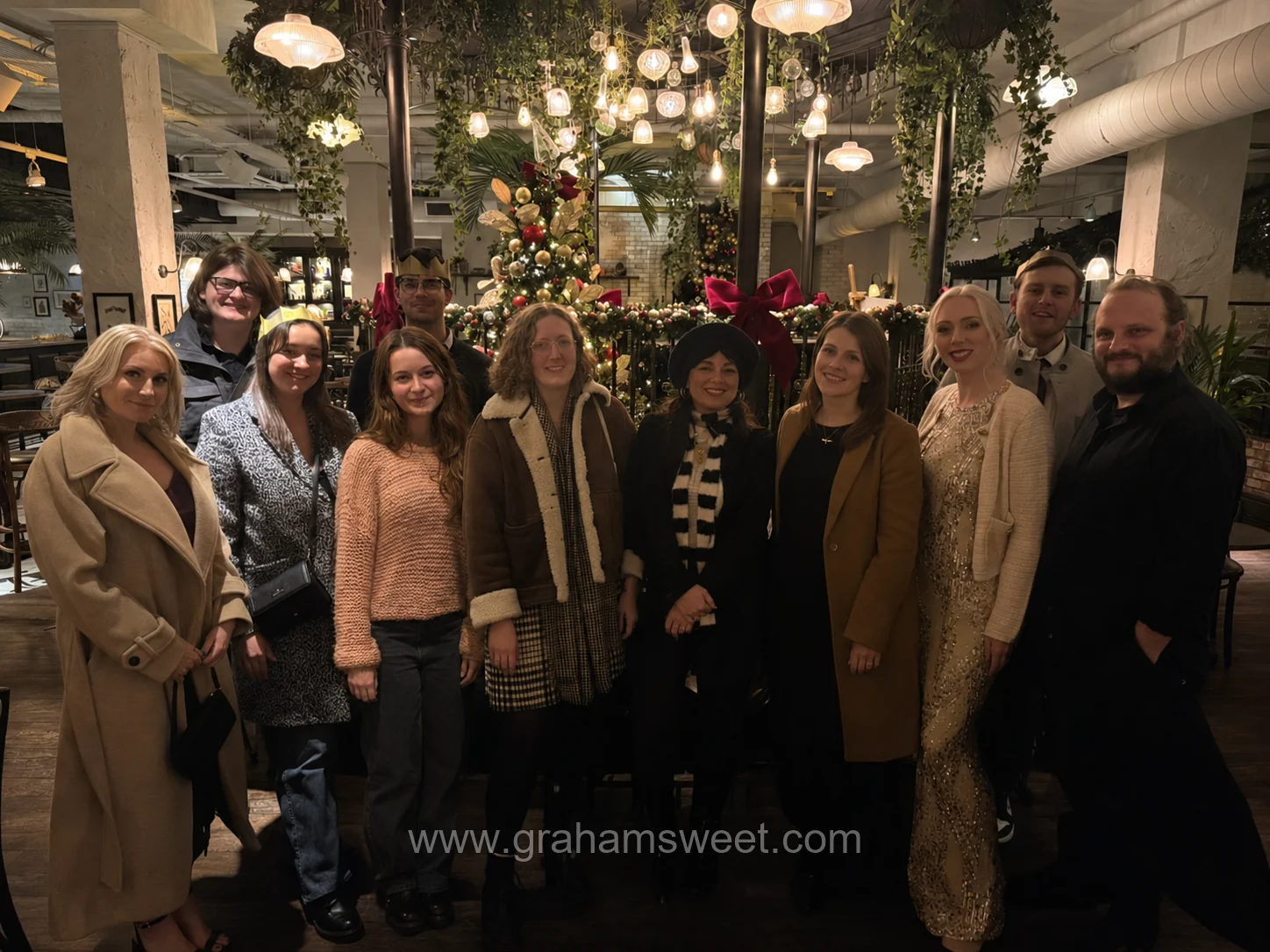
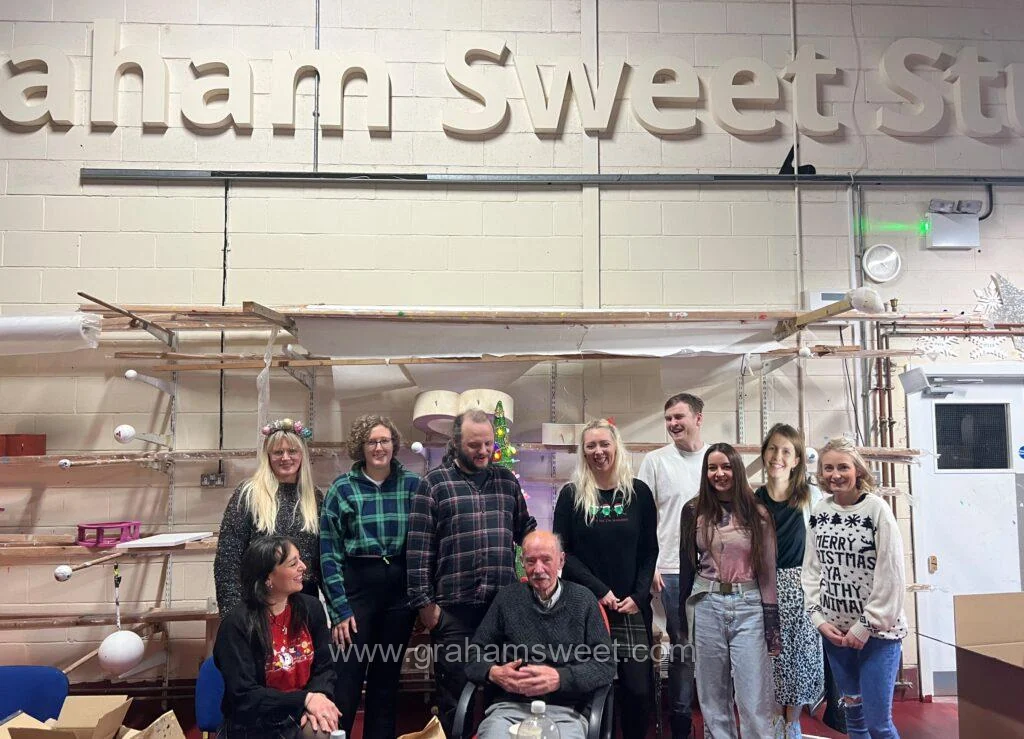
Tegan joined Graham Sweet Studios in 2011 while studying ceramics at university. Now Production Manager, she oversees many of the studio’s creative projects, combining artistic judgement with practical manufacturing expertise. She helps turn unusual ideas into finished pieces, guides projects through the workshop and remains closely involved in the hands-on work.
Claire joined Graham Sweet Studios in 2014, bringing experience in interior architecture and retail management. Now Commercial Manager, she works with customers to develop ideas, combining design awareness with practical manufacturing knowledge. She helps shape projects around the intended result and budget, and remains happy to get involved in the hands-on work.
As the team grew, so too did the range of skills and experience within the studio.
Graham took great satisfaction in seeing others develop their abilities and confidence, passing on not only technical knowledge but also the curiosity and willingness to experiment that had characterised his own career.
His influence extended well beyond the products he invented or the business he established. It could be seen in the people around him and the collaborative way the studio approached its work.
Continuing to Evolve — New Materials and Manufacturing
The late 2010s and early 2020s saw further investment in manufacturing technology and the development of new capabilities.
Although expanded polystyrene remained the studio’s principal material, Graham Sweet Studios increasingly began incorporating other materials and processes into its work.
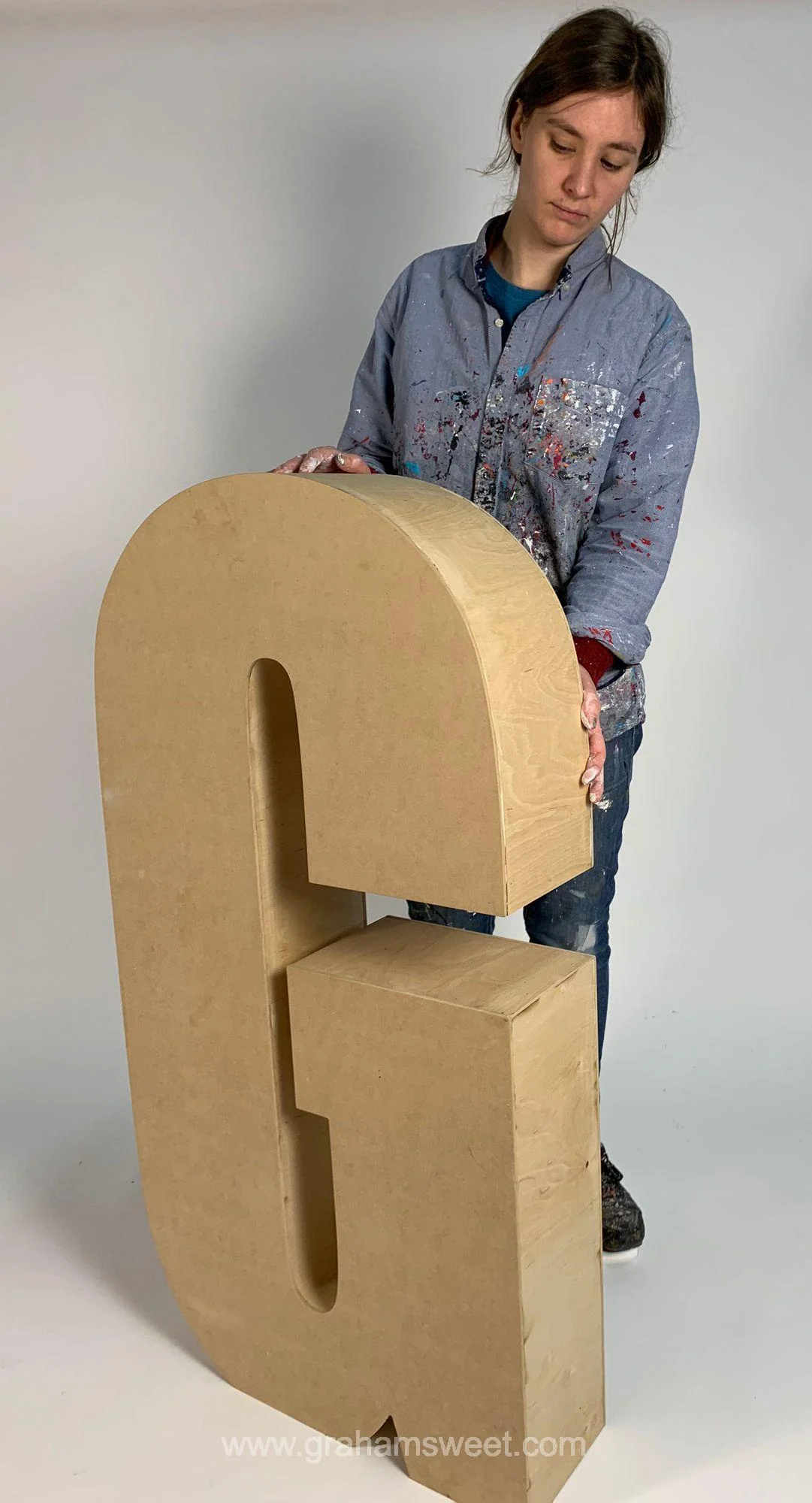
The introduction of CNC routing equipment and a dedicated carpentry workshop expanded the range of components and structures the business could manufacture.
More recently, 3D printing has introduced further possibilities for detailed models, complex shapes and bespoke components.
The studio has also continued its tradition of experimentation, including ongoing development of a modern paper-based composite process intended to create props without expanded polystyrene.
These developments reflect an approach that has been central to Graham Sweet Studios since its earliest days: exploring new ideas, adapting manufacturing techniques and finding practical solutions to unfamiliar challenges.
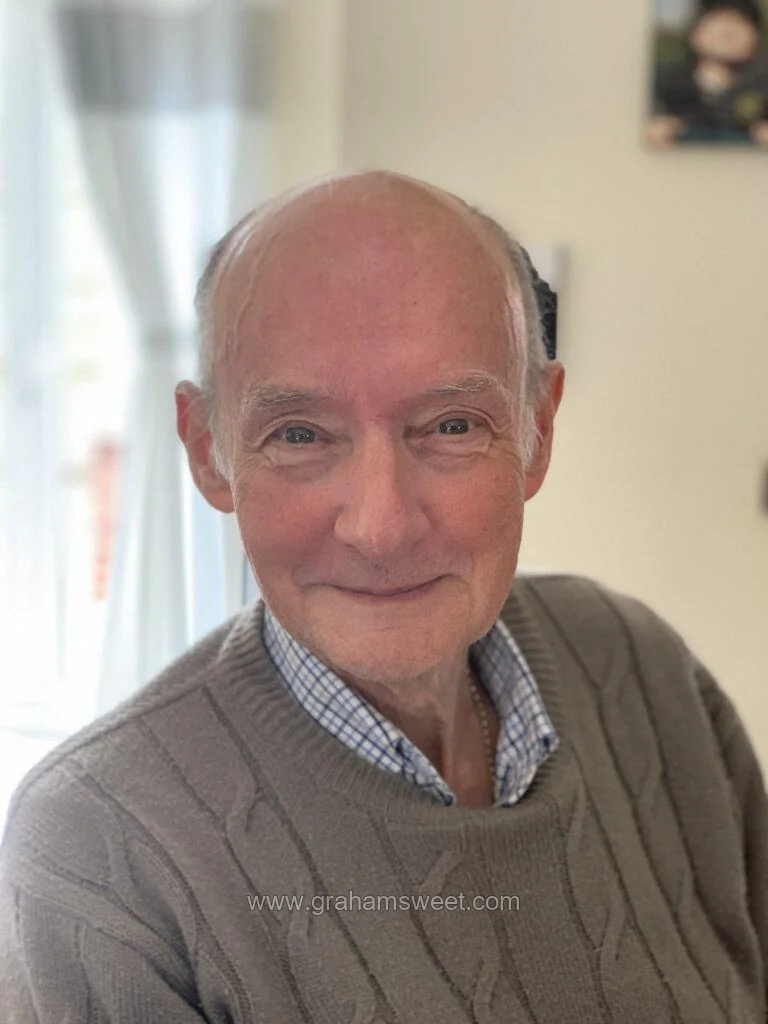
A Lifelong Enthusiasm for Innovation
In 2018, Graham began to step back slightly from some of his day-to-day responsibilities, giving the next generation more room to lead the business.
But he never truly stepped away from Graham Sweet Studios.
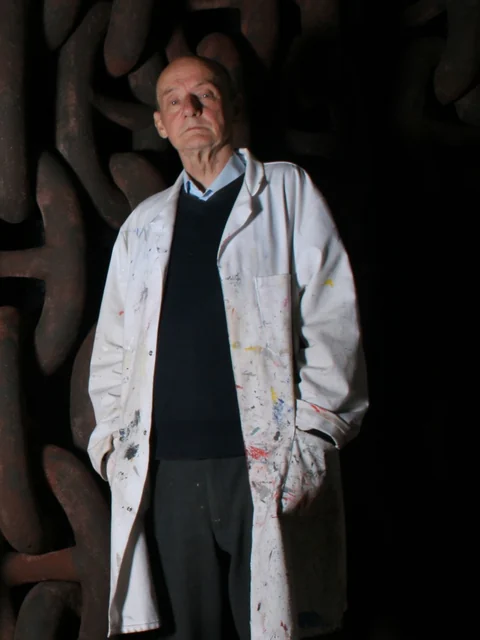
Even well into his eighties, he was still at the studio almost every day, remaining actively involved in the work, the people and the decisions shaping the company’s future.
His curiosity and enthusiasm for new technology never diminished, nor did his commitment to the business he had spent a lifetime building.
That dedication continued right to the end. Just four weeks before his passing, while in hospital following a stroke, Graham and Siôn were still going through the company’s accounts together.
For Graham, the studio was never simply a place of work. It was a lifelong passion, and something he remained deeply involved in throughout his life.
Continuing Graham’s Legacy
In 2021, the long-established family business was incorporated as Graham Sweet Studios Ltd, marking another chapter in its development.
The same year also brought the sad loss of Noeline, whose contribution had been so important throughout the company’s history.
On 7 September 2023, Graham passed away peacefully at home, aged 84.
He left behind far more than a successful business.
His legacy includes decades of inventions, unusual creations, manufacturing techniques and projects, but perhaps just as importantly, the knowledge, encouragement and creative spirit he shared with those around him.
Today, as Managing Director, Siôn leads Graham Sweet Studios into its next chapter, drawing on more than four decades of involvement in the family business.
Alongside an experienced and talented team, he continues to develop the studio’s manufacturing capabilities, explore new materials and techniques, and build on the reputation established by Graham.
While the business continues to evolve, its foundations remain unchanged.
Much has changed since Graham opened his first studio in 1970.
The equipment is different, the materials have evolved and the range of projects is broader than ever.
But the principles on which he built the business remain.
Creativity, craftsmanship, innovation and a determination to find practical solutions to unusual challenges.
These were Graham’s values, and they continue to guide Graham Sweet Studios today.